Towing Capacity vs. Payload Capacity: The Crucial Difference Most Drivers Miss
If you ask the average truck owner what their vehicle can handle, they will usually quote a single, impressive number: their maximum towing capacity. Dealerships and truck commercials heavily promote these massive figures, often boasting numbers like 10,000 or even 14,000 pounds.
But focusing solely on towing capacity is the single most common—and dangerous—mistake made by new RV owners and trailer towers. In the real world, you will almost always exceed your truck's payload capacity long before you ever reach its maximum towing limit.
Understanding the relationship between towing capacity and payload capacity is the key to a safe, legal, and comfortable towing experience.
What is Towing Capacity?
Towing capacity is the maximum amount of weight your vehicle can legally and safely pull horizontally down the road. This number is determined by the manufacturer based on the vehicle's engine power, transmission cooling, frame strength, and braking capability.
If your truck has a maximum towing capacity of 10,000 pounds, it means the vehicle is mechanically capable of pulling a 10,000-pound trailer on a flat highway without destroying the powertrain. However, towing capacity exists in a vacuum. It assumes the truck itself is completely empty, carrying only a 150-pound driver and a full tank of gas.
What is Payload Capacity?
Payload capacity is the maximum amount of weight your vehicle can safely carry vertically on its own suspension. This includes absolutely everything that goes in or on the truck.
Your payload capacity must account for:
- The driver and all passengers
- Cargo in the truck bed or trunk
- Aftermarket accessories (toolboxes, tonneau covers, upgraded bumpers)
- Trailer Tongue Weight
That last bullet point is where the math falls apart for most drivers.
The Silent Limit: Trailer Tongue Weight
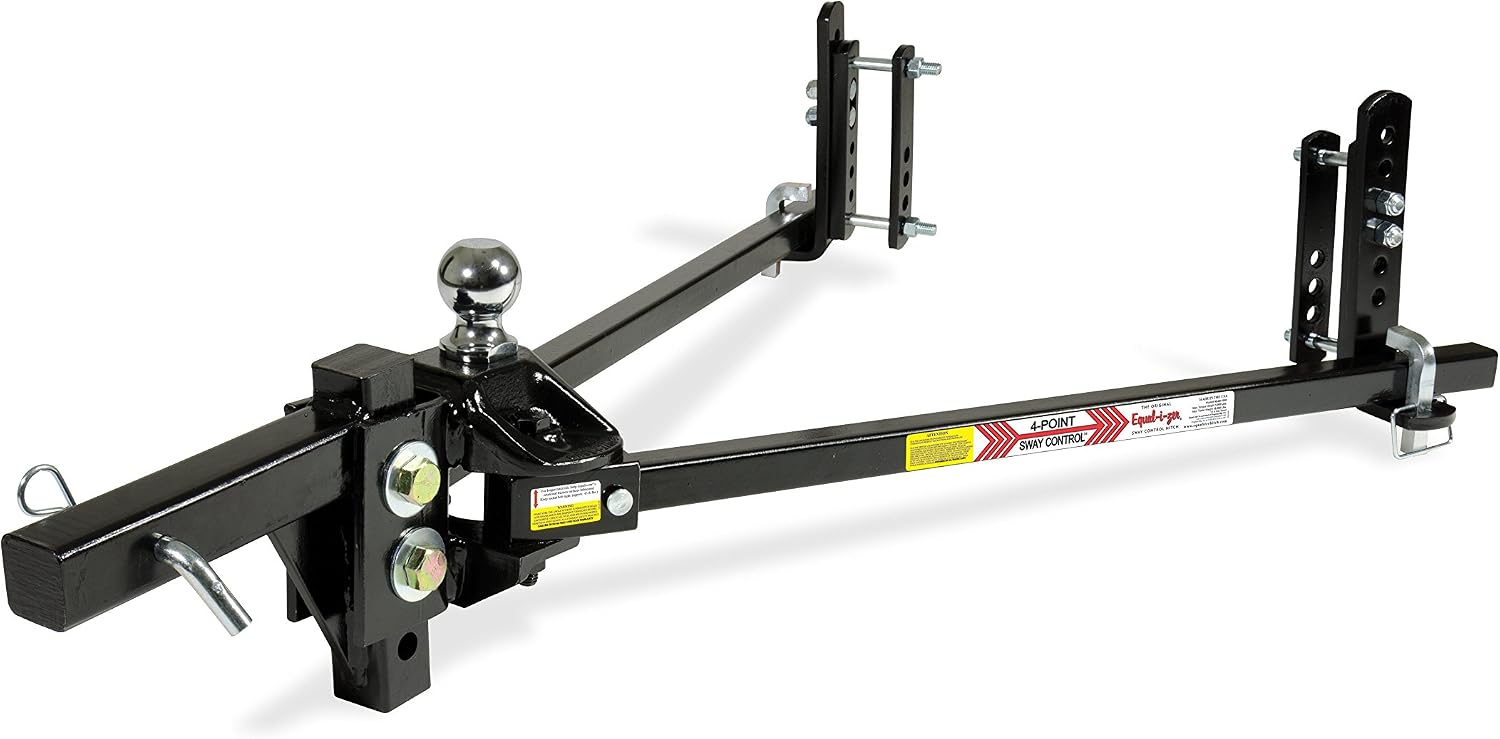
When you hook a trailer to your hitch, the trailer does not just pull backward; it also pushes down. The amount of downward force the trailer applies to the hitch is called tongue weight.
For a trailer to remain stable and avoid dangerous swaying at highway speeds, standard bumper-pull trailers require 10% to 15% of their total loaded weight to rest on the hitch. Fifth-wheel and gooseneck trailers require even more—typically 15% to 25%.
This tongue weight is treated as cargo. It subtracts directly from your truck's payload capacity.
The Math in Action: Why Payload is the True Bottleneck
Let's look at a realistic scenario using a popular half-ton pickup truck.
Imagine you own a truck with a heavily advertised 10,000 lb towing capacity. You check the yellow tire-and-loading sticker inside your driver-side door jamb and see that your specific truck has a 1,500 lb payload capacity.
You decide to buy a travel trailer that weighs 8,000 pounds fully loaded.
On paper, you are 2,000 pounds under your max towing capacity. You might think you are perfectly safe. But let's calculate the payload:
- Tongue Weight: At an ideal 12.5% tongue weight, your 8,000-pound trailer pushes down on your hitch with 1,000 pounds of force.
- Passengers: You, your spouse, and two kids weigh a combined 500 pounds.
- Cargo: You put a 100-pound cooler and 100 pounds of firewood in the truck bed.
Total Payload Used: 1,000 lbs (tongue weight) + 500 lbs (passengers) + 200 lbs (cargo) = 1,700 lbs.
Even though you are 2,000 pounds under your towing capacity, you are 200 pounds over your truck's payload capacity. Your rear suspension will sag, your front tires will lose traction, your braking distance will drastically increase, and you run the risk of blowing out a rear tire or damaging your axle.
How to Protect Yourself
To tow safely, you must abandon the idea of a single “max tow” number. Your vehicle operates on a dynamic threshold where every pound you put inside the cab reduces the size of the trailer you can legally pull behind it.
The easiest way to verify your setup is to use a dynamic calculator that runs both equations simultaneously. By entering your vehicle's exact payload sticker and your anticipated cargo, you can calculate your true, real-world towing limit before you ever hitch up. You can calculate your exact safety margins using our free Safe Towing Calculator.