The Ultimate Guide to Weight Distribution Hitches: How They Work and When You Need One
When you attach a heavy trailer to the back of a pickup truck or SUV, the immediate physical reaction is obvious: the rear end of the vehicle squats down, and the front end lifts up. While a slight squat is normal, excessive sagging is one of the most dangerous conditions you can face on the highway.
This is where a Weight Distribution Hitch (WDH) comes in. Often misunderstood as a device that magically increases a vehicle's towing capacity, a WDH is actually a specialized suspension tool designed to restore balance, steering control, and braking power to your tow vehicle.
The Physics of Trailer Tongue Weight
To understand why a weight distribution hitch is necessary, you first need to understand tongue weight. For a standard bumper-pull trailer to remain stable at highway speeds, between 10% and 15% of its total loaded weight must rest directly on the hitch ball.
If you are towing a 7,000-pound travel trailer, that means up to 1,050 pounds of force is pushing straight down on the very back of your vehicle.
Because the hitch is located several feet behind the rear axle, it acts as a lever. That 1,050 pounds of downward force doesn't just compress the rear suspension; it actually acts as a pivot point, lifting the vehicle's front tires upward and reducing their contact with the road.
When your front tires lose their firm grip on the pavement, several dangerous things happen:
- Loss of Steering Response: Your vehicle will feel “floaty” and less responsive to steering inputs.
- Decreased Braking Power: Up to 70% of a vehicle's stopping power comes from the front brakes. Lifting the front axle severely reduces your ability to stop quickly.
- Headlight Misalignment: Your headlights will point up into the trees (and into the eyes of oncoming drivers) rather than illuminating the road ahead.
How a Weight Distribution Hitch Works
A Weight Distribution Hitch does exactly what its name implies: it takes that massive, concentrated tongue weight and redistributes it across all the axles of the tow vehicle and the trailer.
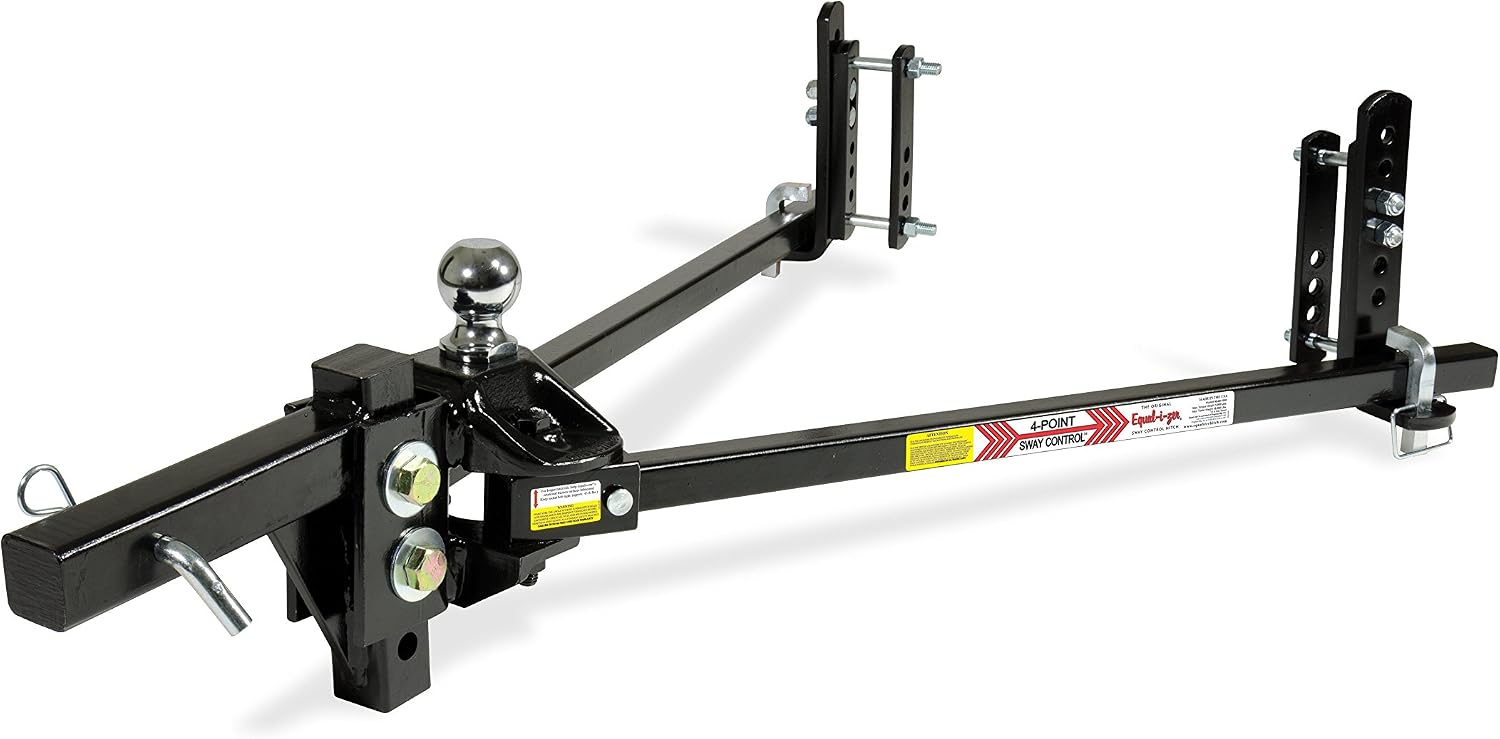
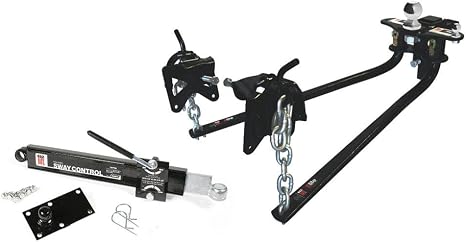
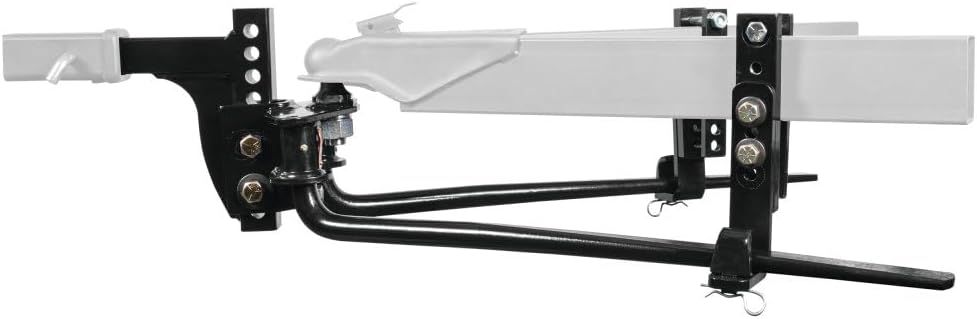
It accomplishes this using heavy-duty spring bars (sometimes called trunnion bars or round bars). These bars slide into the hitch head on the vehicle and connect to brackets mounted on the trailer's A-frame.
By applying tension to these spring bars (using chains or rigid brackets), the hitch effectively creates a bridge between the tow vehicle and the trailer. This tension leverages the weight off the rear axle of the tow vehicle and pushes it forward onto the front axle, while also transferring a portion back onto the trailer's axles.
The result? The tow vehicle sits perfectly level. The front tires regain their grip, the steering feels tight and controlled, and the braking system can perform at its peak.
When Do You Actually Need a WDH?
A common misconception is that every trailer requires a weight distribution hitch. In reality, it depends entirely on the weight of the trailer relative to the size of the tow vehicle.
Here are the standard industry guidelines for when to use a WDH:
1. The 5,000-Pound Rule
As a general rule of thumb, most auto manufacturers recommend (or strictly require) a weight distribution hitch if the loaded trailer weighs more than 5,000 pounds. At this weight, the tongue weight usually exceeds 500 pounds, which is the limit for a standard Class III weight-carrying hitch.
2. The 50% Rule
If the loaded weight of your trailer is more than 50% of your tow vehicle's curb weight, a WDH is highly recommended. For example, if your SUV weighs 4,500 pounds, you should consider using a WDH for any trailer over 2,250 pounds to maintain optimal stability.
3. Visible Squat
If you hook up your trailer and the rear of your tow vehicle drops by more than two inches, or if the front wheel well rises by more than an inch, you need a weight distribution hitch to correct the geometry.
Does a WDH Increase Towing Capacity?
This is the most critical safety distinction to understand: No. A weight distribution hitch does not increase your vehicle's towing capacity or payload capacity.
If your truck is rated to tow a maximum of 6,000 pounds, bolting on a heavy-duty WDH does not magically allow you to tow 8,000 pounds. The engine, transmission, frame, and axles are still bound by their factory limits.
Furthermore, the WDH itself is heavy. The hitch head, shank, and spring bars often weigh between 75 and 125 pounds. This weight must be subtracted from your tow vehicle's payload capacity.
Finding the Right Hitch for Your Setup
Choosing the right weight distribution hitch requires matching the hitch's spring bar rating to your actual, fully loaded tongue weight. If you buy a hitch rated for 1,200 pounds of tongue weight but your trailer only has 600 pounds, the ride will be dangerously rigid. Conversely, using 600-pound bars on a 1,000-pound tongue weight will completely negate the hitch's effectiveness.
To ensure your vehicle and trailer are operating within safe, legal limits—and to determine if your specific setup triggers the need for a WDH—use our free Trailer Weight Calculator. By inputting your exact vehicle and cargo data, you can see real-time safety margins and verify if weight distribution is required for your next trip.