Trailer Sway Causes & Recovery: The Physics of Fish-Tailing
Ask any experienced RV owner about their scariest moment on the road, and they will likely describe a severe bout of trailer sway. Also known as “fish-tailing,” trailer sway occurs when the trailer begins whipping side-to-side behind the tow vehicle.
What starts as a gentle side-to-side wiggle can, within a matter of seconds, violently amplify until the trailer physically picks up the rear end of the tow vehicle, snapping both the truck and the trailer into a catastrophic rollover.
Understanding the physics of why trailer sway happens, how to prevent it, and exactly what to do when it strikes is the most important survival skill a driver can master.
The #1 Cause of Sway: Improper Tongue Weight
While weather and road conditions can trigger sway, the root mechanical cause is almost always improper weight distribution inside the trailer. Specifically, not having enough weight on the tongue.
Think of a trailer like a playground seesaw, with the trailer axles acting as the center pivot point. For a bumper-pull trailer to tow in a straight, stable line, the center of gravity must be located in front of the axles. This is why industry standards dictate that 10% to 15% of the trailer's total weight must rest on the hitch.
If you load heavy cargo (like generators, water, or ATVs) at the very back of the trailer, the center of gravity shifts behind the axles. The trailer becomes rear-heavy. In this state, the trailer acts like a pendulum. The slightest disruption will cause the heavy rear end to swing outward, using the axles as a pivot to violently shove the front of the trailer—and your tow vehicle's hitch—in the opposite direction.
External Triggers: The “Bow Wave” and Crosswinds
Even a perfectly loaded trailer can experience minor sway when introduced to external forces. The two most common triggers on the highway are:
1. The Semi-Truck Bow Wave
When a large 18-wheeler passes you at highway speeds, it pushes a massive wall of compressed air in front of it, known as a bow wave. As the truck's cab passes the rear of your trailer, this compressed air slams into your trailer's sidewall, pushing the rear end away. A second later, as the truck passes your tow vehicle, a vacuum is created that violently sucks the trailer back toward the truck. This push-pull effect easily initiates a sway cycle.
2. High Wind Gusts
Travel trailers are essentially giant sails. A sudden 30 mph crosswind gust striking the broadside of a 30-foot travel trailer puts thousands of pounds of lateral force onto the tires and the hitch.
How to Recover From Severe Trailer Sway
If you look in your rearview mirror and see the trailer aggressively whipping side-to-side, human instinct will tell you to do two things: hit the brakes and counter-steer. Doing either of these will almost guarantee a crash.
Slamming on your tow vehicle's brakes will cause the trailer to slam into the back of your truck, amplifying the pendulum effect and forcing a jackknife.
Here is the exact, step-by-step procedure to recover from trailer sway:
- Take your foot off the gas pedal. Do not accelerate out of it, and do not hit the vehicle brakes. Let the vehicle naturally begin to coast and lose speed.
- Hold the steering wheel dead straight. Do not try to steer into the sway or fight the motion. Lock your arms and keep the front tires pointing straight down your lane.
- Engage the manual trailer brake override. Reach down to your electronic brake controller and squeeze the manual override slider/button. This applies the brakes only to the trailer.
By applying the trailer brakes while the tow vehicle coasts, you create a massive drag force at the very rear of your setup. This drag acts like a parachute, instantly snapping the trailer back into a straight, taut line behind your truck.
Preventing Sway Before It Starts
Recovery is terrifying; prevention is peaceful. To stop sway before it ever starts, you must rigorously adhere to these three rules:
1. Load the Heavy Stuff Up Front
Always place your heaviest cargo ahead of the trailer axles, as close to the front of the trailer as possible. Ensure your tongue weight sits between 12% and 15% of the total loaded weight.
2. Use Mechanical Sway Control
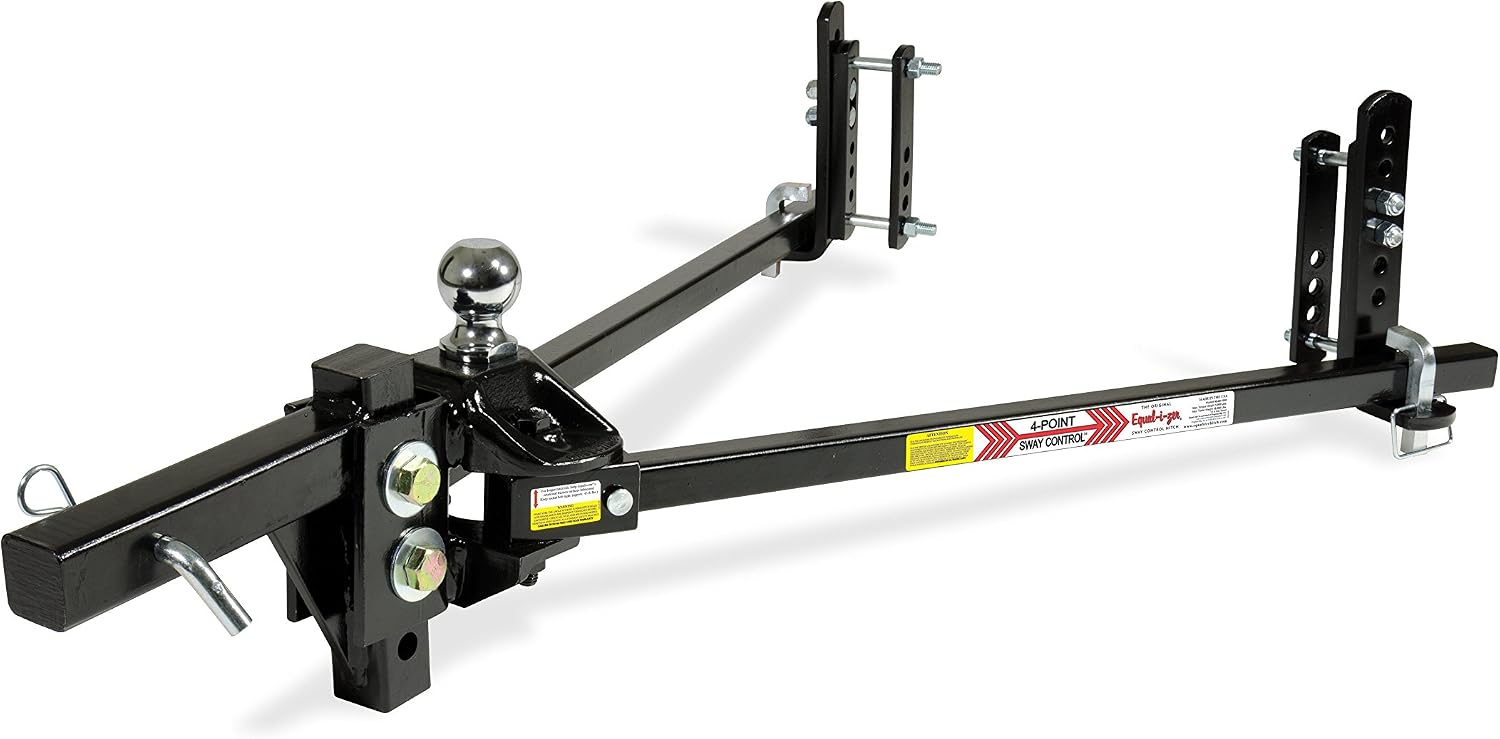
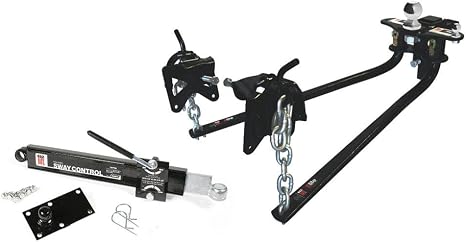
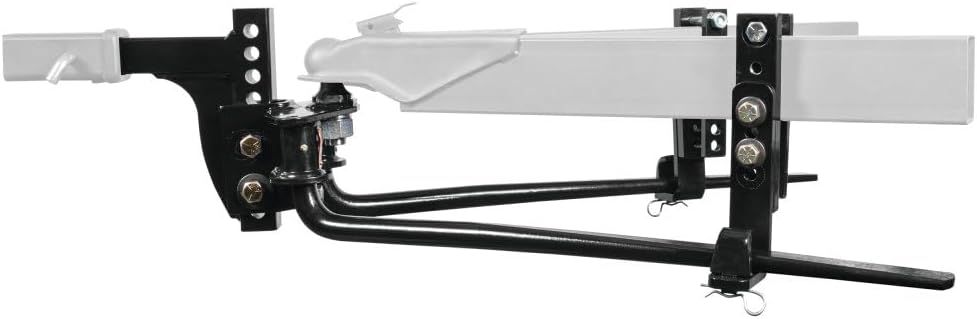
If your trailer weighs more than 5,000 pounds or exceeds 25 feet in length, invest in a Weight Distribution Hitch (WDH) with integrated sway control. Premium systems like the Equal-i-zer 4-point hitch use steel-on-steel friction brackets to physically resist the trailer's side-to-side motion, absorbing the impact of crosswinds and passing trucks.
3. Manage Your Speed
The severity of trailer sway increases exponentially with speed. A trailer that tows perfectly at 60 mph may become an uncontrollable pendulum at 75 mph. Trailer tires are generally speed-rated for 65 mph. Keep your speed down.
Verify Your Setup
Don't guess if you have enough tongue weight to prevent sway. By using our Safe Towing Calculator, you can input your specific trailer type and weight to see exactly how many pounds need to be on the hitch for a stable, sway-free tow.