How to Properly Load a Toy Hauler: Balancing Weight and Preventing Sway
Toy haulers offer the ultimate camping experience, combining a luxury living space with a heavy-duty rear garage for your motorcycles, ATVs, or golf carts. However, from an engineering and physics standpoint, they are the most difficult type of travel trailer to tow safely.
Unlike a standard travel trailer where the floorplan and heavy appliances are fixed, a toy hauler's center of gravity is entirely dynamic. It changes drastically depending on what you park in the garage. If you load your toys incorrectly, you can easily create a lethal towing scenario before you ever leave your neighborhood.
The Rear-Weight Problem
To tow perfectly straight and resist crosswinds, a conventional bumper-pull trailer must have 10% to 15% of its total weight resting on the hitch ball (the tongue weight).
A toy hauler's garage is located at the extreme rear of the trailer, far behind the axles. When you drive a 1,500-pound side-by-side UTV into that garage, that mass acts exactly like a counterweight on a seesaw. It pushes the rear of the trailer down to the pavement and physically lifts the front of the trailer up.
This lifting action violently subtracts weight from the tongue. If loading your toys drops your tongue weight below that critical 10% threshold, the trailer will become wildly unstable at highway speeds, leading to uncontrollable and often catastrophic trailer sway (fish-tailing).
The Empty vs. Full Paradox
Because manufacturers know you are going to put heavy machines in the back, they purposefully design toy haulers with an abnormally heavy factory tongue weight.
An empty toy hauler might boast a staggering 18% to 20% tongue weight right off the dealership lot. This means if you decide to tow the trailer without your toys in the back, the tongue weight will be massive, likely maxing out the payload capacity of a standard truck and requiring a heavy-duty 2500 or 3500 tow vehicle just to handle the empty camper.
You have to account for two entirely different towing profiles: the massive tongue weight when traveling empty, and the drastically lightened tongue weight when traveling fully loaded.
3 Rules for Loading a Toy Hauler
To keep the center of gravity where it belongs and maintain a safe tongue weight, follow these loading strategies:
1. Load the Heavy Cargo Forward First
If you are bringing 1,500 pounds of toys in the rear, you need to balance that with weight in the front. Fill your freshwater tank (which is usually located near the front axles) to add necessary forward ballast. Pack your heavy coolers, generators, and toolboxes as close to the front of the trailer as possible.
2. Push the Toys Over the Axles
Do not simply park your motorcycles at the very rear door of the garage. Drive them as far forward into the garage as the tie-down rings will allow. The closer that engine block sits to the trailer's axles, the less leverage it has to lift the tongue.
3. Empty the Rear Tanks
Fuel stations (for pumping gas into your toys) and black/gray water tanks are often located behind the axles on toy haulers. Never travel with a full rear fuel station and full rear holding tanks if your garage is also fully loaded.
Hitch Adjustments
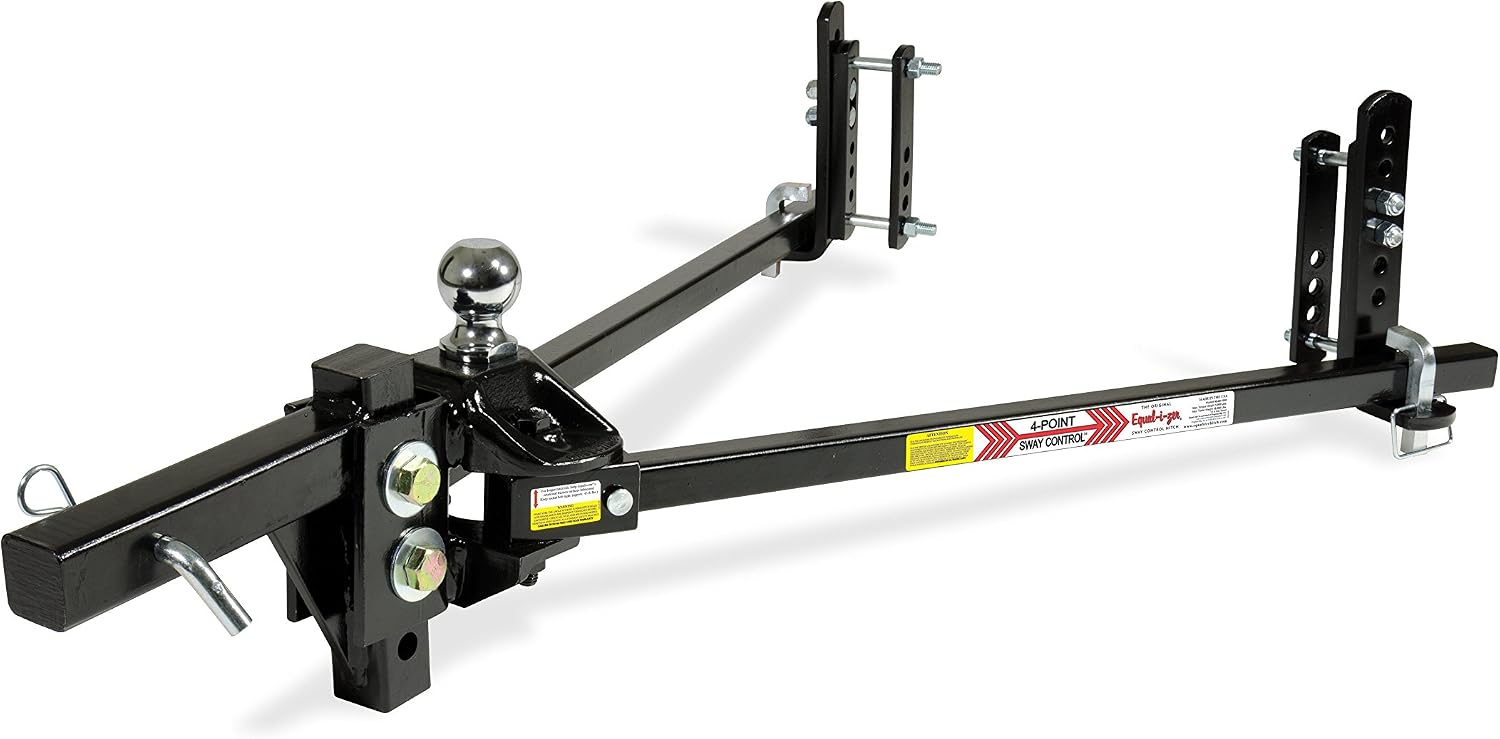
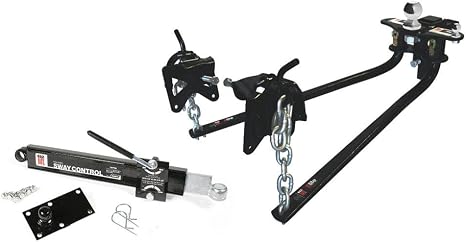
If you are using a Weight Distribution Hitch (WDH), you must tension the spring bars after the toy hauler is fully loaded.
If you set your WDH tension when the garage is empty (when the tongue weight is massive), those spring bars will be way too tight once you load the toys and the tongue lightens up. This can result in a harsh, bouncy ride and reduced rear-wheel traction on your tow vehicle. Always establish your baseline setup with the trailer in its “ready to camp” state.
Run Your Scenarios
Because a toy hauler's weight distribution shifts by thousands of pounds between trips, you cannot rely on static math. You need to run both scenarios: the “Empty Garage” trip and the “Full Garage” trip. Input your changing cargo weights into our Safe Towing Calculator to instantly verify that your tongue weight remains within the 10% to 15% safety window no matter what you bring along.