The Ultimate Guide to Towing Mirrors: Legal Requirements and Upgrades
Modern half-ton trucks and SUVs are incredibly capable machines, but they are primarily designed as passenger vehicles. As a result, their factory side mirrors are optimized for aerodynamics and standard lane changes, not for peering around a massive 8-foot-wide fiberglass box.
When you hook up a standard travel trailer to a vehicle with regular mirrors, your rearward visibility drops to zero. You are completely blind to vehicles riding in your slipstream, making highway merges and lane changes extremely dangerous.
Upgrading your mirrors is not just a good idea for safety and peace of mind—in almost every jurisdiction, it is strictly required by law.
The Legal Requirement for Towing Mirrors
Towing laws vary slightly from state to state and province to province, but the universally accepted legal standard is the 200-Foot Rule.
The law generally states that the driver of a towing vehicle must be able to see clearly down both sides of the trailer and have an unobstructed view of the highway for a distance of at least 200 feet to the rear.
Because most travel trailers and fifth wheels are between 96 and 102 inches wide (8 to 8.5 feet), standard passenger vehicle mirrors simply do not stick out far enough to see past the sidewalls of the trailer. If you are pulled over or involved in an accident, law enforcement will check your mirrors. If you cannot see past the trailer, you can be cited for towing an unsafe load.
Types of Towing Mirrors
If your vehicle did not come with factory-installed heavy-duty tow mirrors, you have three primary options to get street-legal and safe.
1. Universal Clip-On and Strap-On Mirrors (The Budget Option)
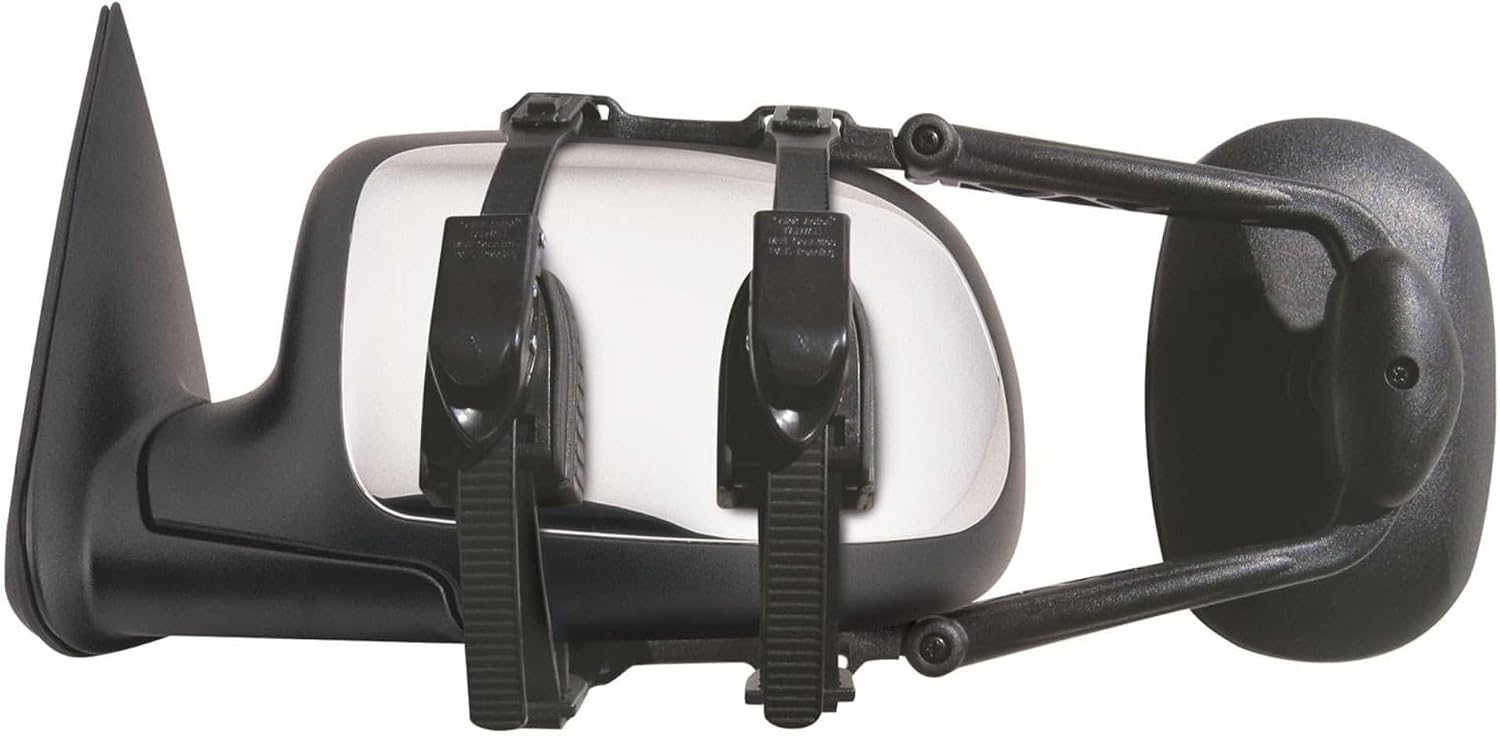
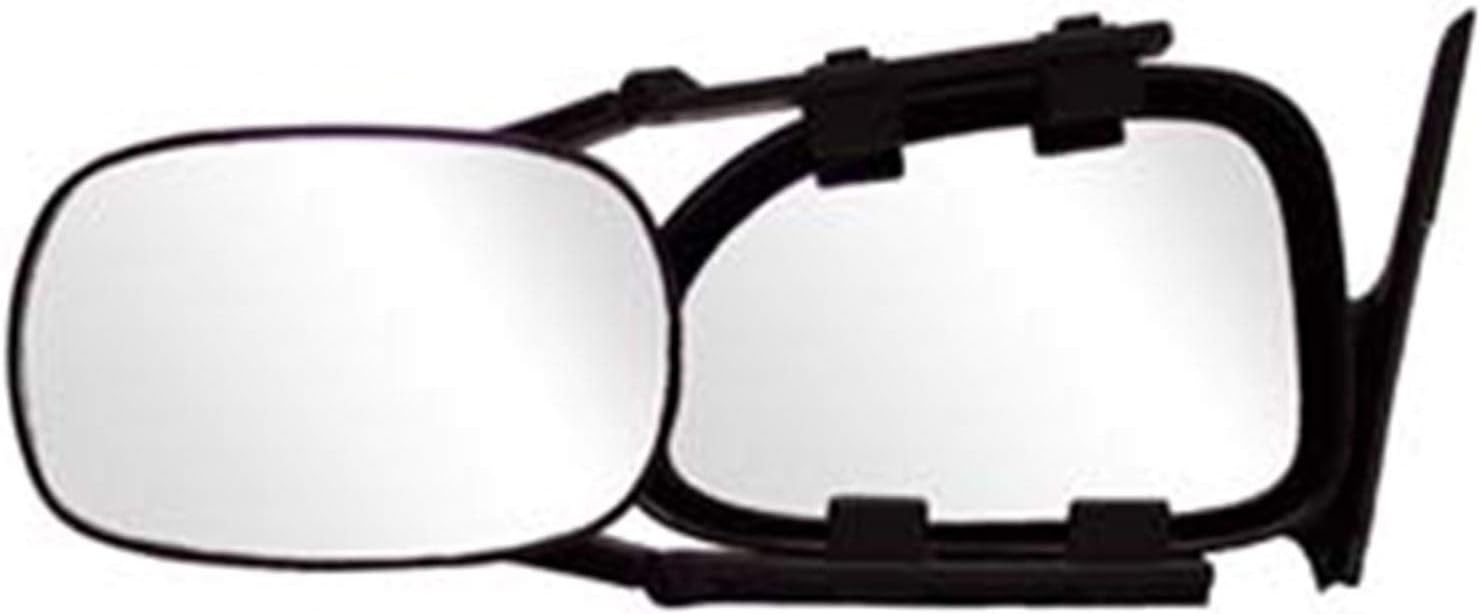
If you only tow a few times a year, universal clip-on mirrors are the most cost-effective and practical solution. These devices use heavy-duty rubber straps or plastic clamps to attach a secondary, extended mirror directly onto the housing of your existing factory mirror.
Pros: Inexpensive, easy to install and remove, and they transfer easily if you buy a new tow vehicle.
Cons: Because they are strapped onto a moving part, they can vibrate at highway speeds, making the image slightly blurry.
Tip: Look for highly-rated dual-glass clip-on mirrors (like the popular Fit System or CIPA models) that offer a wide-angle convex lens alongside a flat mirror.
2. Custom-Fit Slip-On Mirrors
A step up from universal straps, custom-fit slip-on mirrors are molded out of hard plastic to exactly match the contours of a specific vehicle's factory mirrors. You slide them over the mirror housing like a glove and lock them in place with a set screw.
Pros: Much less vibration than universal straps, a clean factory look, and they won't scratch your paint if installed correctly.
Cons: They only fit the specific make, model, and year of the truck they were designed for.
3. Full Aftermarket Replacement Mirrors (The Gold Standard)
If you tow frequently or pull a large trailer, the ultimate solution is to completely remove your small factory mirrors and bolt on a set of heavy-duty, extendable tow mirrors. Brands like Trail Ridge manufacture mirrors that plug directly into your truck's factory wiring harness, retaining features like power adjustment, heated glass, and turn signals.
Pros: Zero vibration, massive viewing area, integrated convex blind-spot mirrors, and they can slide or flip outward when towing and inward for daily driving.
Cons: They are a permanent modification, can be expensive, and make the truck much wider for daily parking.
How to Adjust Towing Mirrors Correctly
Having the right mirrors is only half the battle; aiming them correctly is the other half.
Most proper towing mirrors feature two separate pieces of glass: a large, flat upper mirror and a smaller, curved convex lower mirror.
The Flat Mirror: Adjust the main flat mirror so that the inside edge just barely shows the side of your trailer. The goal is to look straight down the lane beside you to see approaching traffic and monitor the trailer's tires.
The Convex Mirror: The convex (curved) mirror is your blind-spot monitor. Angle this mirror lower and further outward. You want this mirror to cover the area directly beside the tow vehicle's rear doors and the front corner of the trailer—the exact spot where a small car could be hiding when you try to change lanes.
The Big Picture
Towing mirrors are a crucial piece of safety equipment, but they won't stop the trailer if your vehicle is overloaded. While you are upgrading your visibility, make sure your mechanical limits are equally prepared for the journey. Run your truck and trailer weights through our Safe Towing Calculator to ensure your suspension, tires, and payload capacity are fully legally compliant before your next trip.