Travel Trailer Braking Systems: Electric vs. Surge Brakes Explained
When you tow a trailer that weighs more than 3,000 pounds, relying solely on your tow vehicle's brakes is a recipe for disaster. The sheer momentum of that much mass will quickly overheat your truck's brake pads, causing severe brake fade and drastically increasing your stopping distance.
Because of this, almost all jurisdictions legally require heavy trailers to have their own independent braking systems. If you are shopping for a new trailer or troubleshooting an old one, you will encounter two primary types of trailer brakes: electric and surge.
Understanding how they work—and why you can never use them interchangeably—is critical for your safety on the road.
Electric Brakes: The RV Standard
Electric brakes are the undisputed standard for travel trailers, fifth wheels, and heavy equipment haulers.
How They Work
Inside the trailer's wheel hub is a traditional drum brake setup, but instead of using hydraulic fluid to push the brake shoes against the drum, electric brakes use an electromagnet.
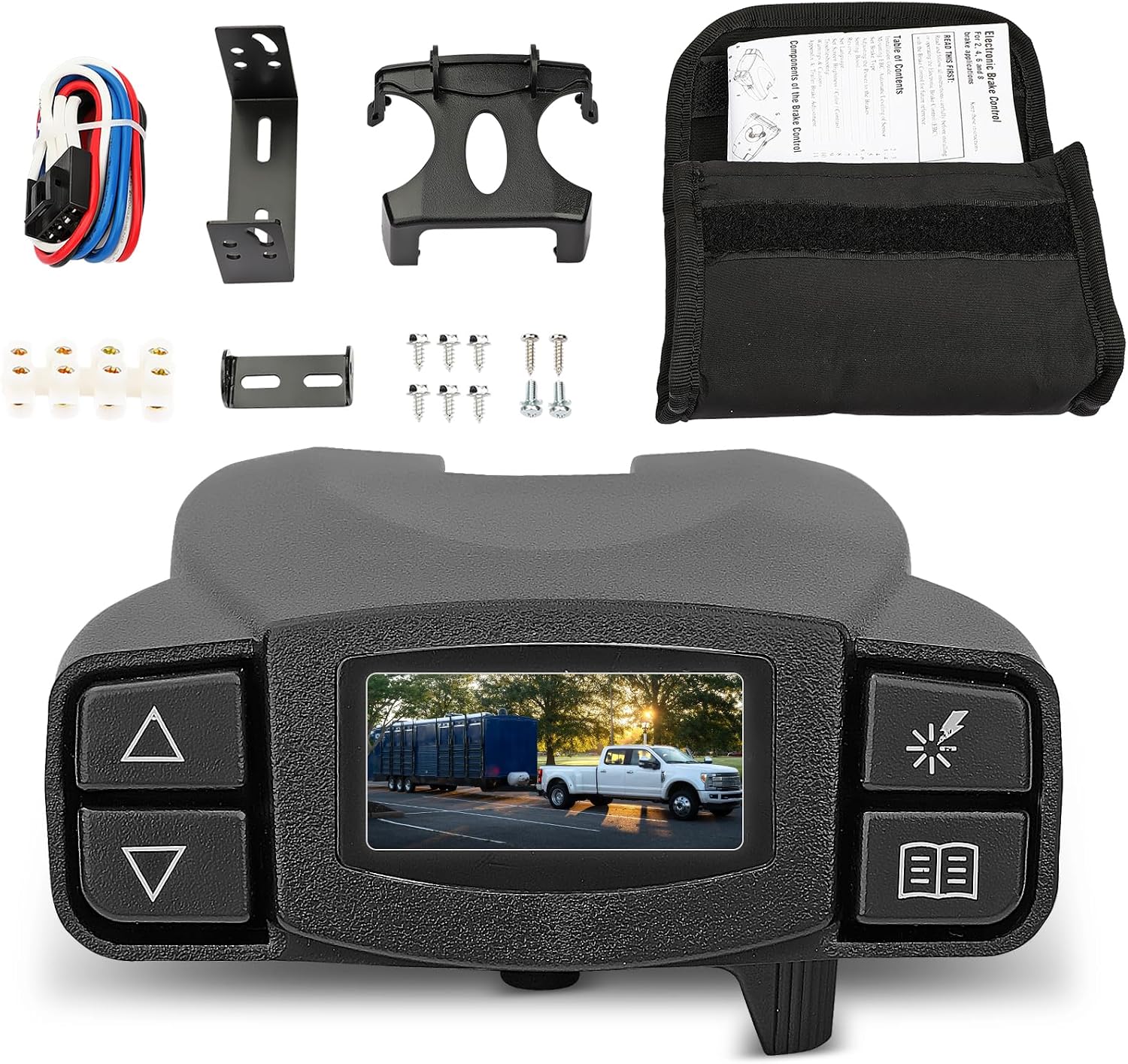
When you press the brake pedal in your tow vehicle, an electronic brake controller mounted in your cab sends a surge of 12-volt electricity down the wiring harness to the trailer. This electricity magnetizes the electromagnet inside the wheel hub. The magnet physically grabs the spinning metal surface of the brake drum, causing the lever arm to push the brake shoes outward against the drum, slowing the trailer down.
The Pros
- Driver Control: Because the system is wired directly into the cab, the driver has ultimate control. You can adjust the braking force (gain) on the fly, and use the manual override lever to apply only the trailer brakes to stop severe trailer sway.
- Proportional Stopping: When paired with a proportional brake controller, the trailer brakes respond perfectly to how hard you are pressing the brake pedal in the truck.
- Reversing is Easy: Electric brakes work exactly the same in reverse as they do going forward, making backing into a tight campsite a breeze.
The Cons
- Water Damage: Electromagnets and electrical wiring do not mix well with deep water. If submerged, the electrical components can short out and fail.
- Requires Tow Vehicle Mods: You cannot tow an electric-brake trailer safely unless your tow vehicle is equipped with a 7-way wiring plug and an integrated or aftermarket brake controller.
Surge Brakes: The Marine Champion
If you own a boat trailer, it is almost certainly equipped with surge brakes.
How They Work
Surge brakes are entirely self-contained and entirely mechanical. There are no wires running to the tow vehicle cab, and no electronic controller is required.
The secret lies inside the trailer's coupler (the part that sits on the hitch ball). The coupler actually slides back and forth slightly. Hidden inside this sliding coupler is a hydraulic master cylinder full of brake fluid.
When you step on the brakes in your tow vehicle, the truck slows down. The heavy trailer, carrying its momentum, surges forward, crashing into the hitch ball. This forward physical “surge” compresses the sliding coupler. The coupler acts like a giant plunger, compressing the master cylinder and forcing hydraulic fluid down the brake lines to clamp the brake calipers on the trailer wheels.
The Pros
- Waterproof: Because they are fully sealed hydraulic systems with zero electrical components, you can back a surge-brake trailer entirely underwater at a boat ramp without damaging the brakes.
- Universal Towing: Anyone with a hitch ball can tow a surge-brake trailer. No in-cab brake controller is needed.
The Cons
- The Reversing Nightmare: If you try to back a surge-brake trailer up an incline, the resistance of the incline causes the trailer to compress against the hitch ball. This automatically locks the trailer brakes, making it impossible to move. To back up, you usually have to get out and insert a physical “lockout pin” into the coupler to prevent it from compressing.
- Zero Independent Control: You cannot manually activate surge brakes from the cab to correct trailer sway. They only activate when the tow vehicle is actively slowing down.
Knowing Your Limits
Regardless of whether your trailer uses electricity or hydraulic fluid to stop, neither system can save you if you exceed the structural limits of your tow vehicle. A 10,000-pound trailer with perfect electric brakes will still push an overloaded half-ton truck right through an intersection.
Before you hit the road, ensure your vehicle has the physical mass and payload capacity required to control your trailer by running your numbers through our Safe Towing Calculator.