Trailer Brake Controllers Explained: Proportional vs. Time-Delayed
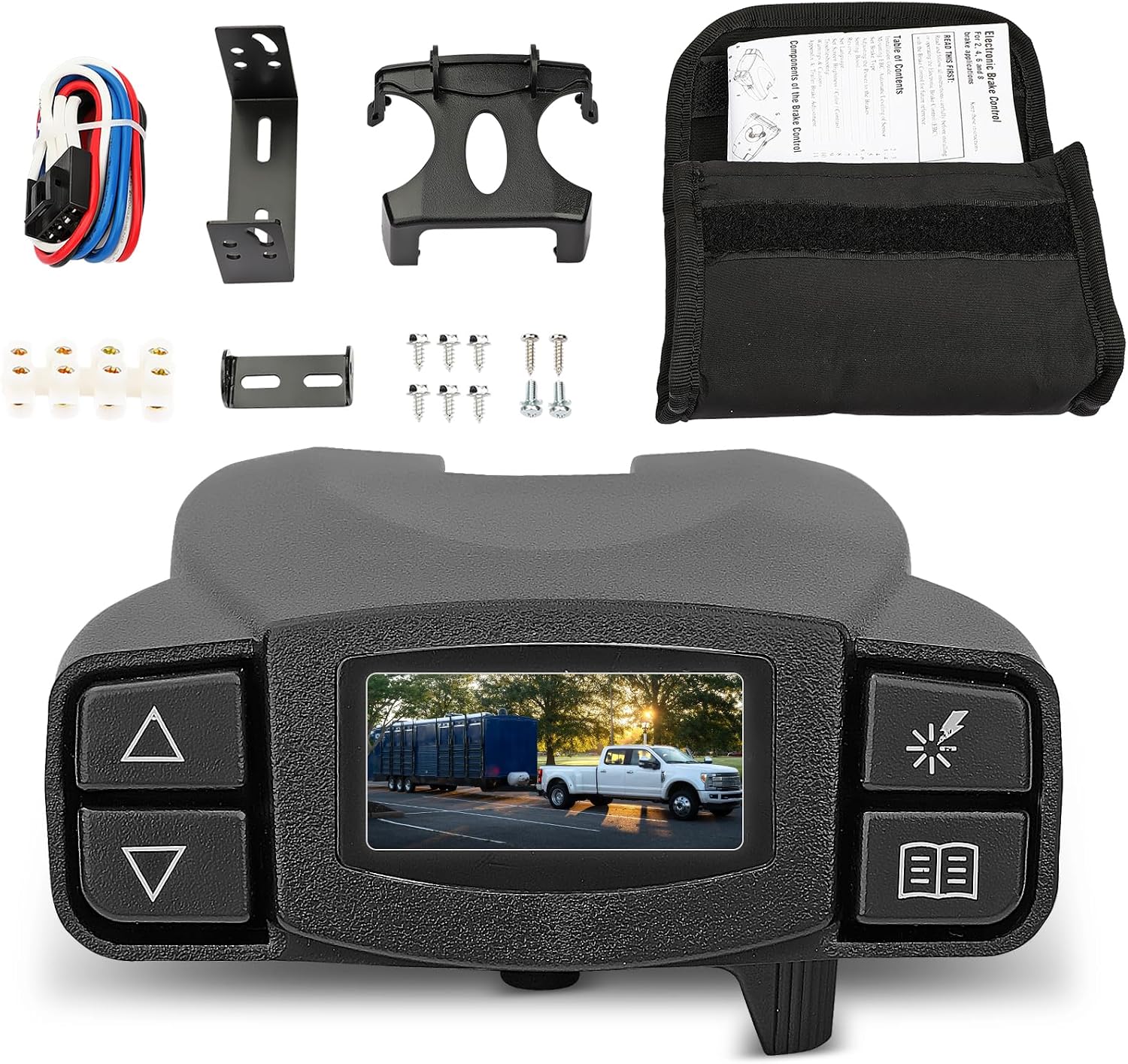
If you are towing a trailer equipped with electric brakes, your tow vehicle must have a brake controller installed. This device is the electronic brain that communicates your braking intentions to the trailer. Without it, your trailer's brakes will not activate, leaving your tow vehicle's brakes to stop thousands of pounds of extra weight entirely on their own—a guaranteed recipe for brake fade and a crash.
While most modern heavy-duty trucks feature an Integrated Trailer Brake Controller (ITBC) built directly into the dashboard at the factory, many SUVs and older half-ton trucks require an aftermarket unit to be mounted under the steering wheel.
When shopping for an aftermarket controller, you will encounter two vastly different technologies: Time-Delayed and Proportional. Choosing the right one determines whether your trailer stops smoothly or violently jerks you every time you touch the pedal.
Time-Delayed Brake Controllers
Time-delayed controllers (also known as solid-state controllers) represent the older, more basic technology.
When you press your foot on the tow vehicle's brake pedal, the controller sends a pre-set amount of electrical current back to the trailer brakes. It does not matter how hard or how softly you press the brake pedal—the controller simply sends the exact same amount of power every single time.
The “time-delay” aspect refers to how quickly that power reaches its maximum setting. The driver manually sets a delay rate (the “Sync” setting) and a maximum power output (the “Gain”). When you hit the brakes, the controller ramps up the power from zero to the maximum Gain over a set period of seconds.
Pros
- Inexpensive: These are the cheapest controllers on the market.
- Mounting Flexibility: Because they do not rely on gravity sensors, you can mount a time-delayed controller at any angle, even vertically on the dashboard.
Cons
- Jerky Stops: Because the controller applies the same power regardless of your speed, a gentle stop at a traffic light can result in the trailer brakes grabbing aggressively, jerking the tow vehicle.
- Dangerous in Emergencies: If a deer jumps in front of your truck and you slam on the brakes, the controller still applies the trailer brakes gradually according to its time delay. You will not get instant, maximum trailer braking when you need it most.
Proportional Brake Controllers
Proportional controllers (also known as inertia-based controllers) are the modern standard for safe towing.
These devices use internal accelerometers and inertia sensors—the exact same technology used in your smartphone to detect when you turn it sideways. These sensors constantly measure the physical momentum of your tow vehicle.
When you step on the brake pedal, the proportional controller calculates exactly how fast your tow vehicle is slowing down and instantly sends the exact, proportional amount of power to the trailer brakes.
If you tap the brakes gently in highway traffic, the trailer brakes apply gently. If you slam on the brakes in a panic stop, the trailer brakes instantly lock up with maximum force.
Pros
- Incredibly Smooth: The trailer stops at the exact same rate as the tow vehicle, completely eliminating the jerking sensation.
- Emergency Stopping Power: Instant, maximum power is delivered during panic stops.
- Less Wear and Tear: Because the braking load is shared perfectly, your brake pads and trailer electromagnets last significantly longer.
Cons
- Strict Mounting Angles: Because they rely on gravity and inertia, proportional controllers must be mounted completely level and facing perfectly forward in the direction of travel, limiting where you can put them in a cramped cab.
- Higher Cost: They are more expensive than time-delayed models (though premium models like the Tekonsha P3 are still highly affordable upgrades).
The Verdict
Unless you are strictly towing a lightweight utility trailer across town a few times a year, you should never buy a time-delayed brake controller.
The safety benefits of a proportional controller in an emergency braking situation far outweigh the slightly higher purchase price. The ability to stop a heavy travel trailer smoothly and predictably is arguably the most important safety upgrade you can make to your rig.
Once your brake controller is installed and dialed in, you need to ensure your physical weights are equally safe. Run your vehicle's payload capacity and trailer weight through our Safe Towing Calculator to verify you are mathematically clear for your next trip.